Education in Hong Kong

When you look at the league tables for schools and literacy there are a few countries who seem to have just ’got it right’.  Of course there are fluctuations but a number of areas always score consistently well in all areas of basic literacy.  There are several Scandanavian countries from Europe, but one area that is almost always there is Hong Kong.  So what makes this ex-British colony so successful at educating it’s youngsters?

There certainly seems to be a huge emphasis on simple hard work. The colony as a whole was built on this pretext and it’s education system reflects these roots.  Unlike many countries, the concept of class is virtually unknown – if you  need to better yourself and your lives then education is the major route.  

Many also point to the fact that Hong Kong itself has little in the way of welfare benefits, the state is not there to step in for people who need them.  Parents invest in their children as a form of pension, obviously this means there is much more incentive for the child to succeed.  Parents also are known for their diligience and take an extremely keen interest in their childs education.  Ever heard a parent complaining to a teacher about lack of homework – it’s something you’ll hear regularly in HK.

Parent’s also invest heavily in extra tuition and classes for their children.  It is estimated that over 70% of  secondary school pupils have some form of additional private tuition.  The curriculum is very traditional and extremely academic with core subjects which include Chinese, Maths and English.  There are other classes on art , music and drama but these are normally trimmed back in later years and especially during the run up to examinations.

Hong King also has an extremely modern infrastracture with for example very high broadband speeds.  Also Hong Kong does not suffer from the restrictive internet censorship that is practiced in China where you’re likely to get blocked a lot  -in HK it’s not necessary to spend time learning how to sidestep the firewall and video blocks – like this - over and over again.

Critics would argue that Hong Kong should be ranked highly purely because  there entire focus is on examinations.  There is a selective education system which rewards the best results with access to the better secondary school.  The pressure on young children though to succeed is extremely high and opinion is divided whether this does lead to long term benefits.

The Young and IT Literacy

The youngest generation of our planet, have pretty much grown up surrounded by technology.  My youngest son could happily use a mouse before his 2nd birthday in fact I’m pretty sure he could use it before he could walk properly. In a earlier post we highlighted some of the other life skills that adults are missing out on. However this familiarity with technology has not led to a marked increase in overall IT skills.

My children are well used to using technology, but scratch the surface and their knowledge is pretty basic.  The problem with todays technology is it’s so easy to use that you don’t really have to expand your knowledge.  A recent survey by the Prince’s trust in the UK suggested that thousands of young people have very basic IT skills.

In their survey ten percent of the young people they spoke to couldn’t send a CV online to an agency.  Nearly a quarter would dread filling in a CV or job application online.  Nearly all of these people are regular users of technology but cllicking around their phone, surfing through Facebook or updating status pages doesn’t really teach any useful skills.

Computer literacy is becoming more and more vital in todays technological world.  However when I asked a group of 15 year olds some basic IT questions it was apparent to me that this literacy is sadly lacking.  In fact out of the class full I asked only one had reasonable computer knowledge.  He had learnt while trying to set up a VPN on his iPad to watch BBC Iplayer, when staying in the US for his summer holidays.  This young man apart, the knowledge was limited to point and click and a knowledge of phone apps and suchlike.

Basic computer skills are not just needed for a career in IT, there is virtually no sector where it isn’t a huge advantage to have at least some computer skills. It is also a way to get into a wide variety of different careers, computer literacy is a huge asset for any employee.  

Literacy Can Be Fun

Now I don’t know about your kids but mine learn a lot better with a little fun included.  This is one of the real problems I’ve found with teaching my children to read, until they get to a certain stage the available books are just too dull for words.  However fortunately we live in a world of interactive media, the internet and some genuinely quality educational resources and TV programmes.  There are of course loads of resources available online, but I’d like to point you at one site that has just about everything you’ll need to help your kids at the earlier stages of their reading development.

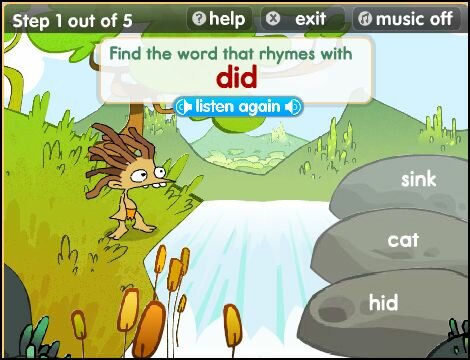
The site is none other than The BBC and it contains a huge section of pages designed specifically to improve literacy.  The site is called Bitesize and is split into three sections – science, maths and literacy.  Here’s a screenshot from one of the literacy games - 

All the lessons are interactive and can be replayed over and over again.  This game helps with simple words and sounds that rhyme, most children really enjoy the cartoon type graphics and interactive elements.

But these are more than just a selection of fun flash games to sit your children down in front of.  If you look in the site you’ll find much more there is even a teachers/parents section with suggested lesson plans.  These incorporate the games and then expand on them with class based activities and tasks which the children can play without access to a computer.

Of course the BBC are primarily known for their world class programmes and the childrens channels are focussed in two specific  channels – CBBC and CBeebies for younger children.  All these programmes are available online using their custom video player called BBC Iplayer.  Unfortunately access to BBC IPlayer is blocked outside the UK however there is a workaround – if you visit this page - http://www.proxyusa.com/bbciplayerabroad2012 you’ll see the solution.  It’s not very difficult, you just basically have to surf via a UK based server to make it look like you’re based in Britain, it’s quick and easy to do.  


Early Learning Research

I was reading an interesting article about preschool language literacy on the Vanderbilt University website. The discussion centers around research that seems to show that preschool children who are exposed, in a structured way, to more sophisticated language will go on to have a larger vocabulary and better reading ability by the time they are grade 4 students.

This is of course very interesting news for childhood educators and parents alike. There are plenty of things that both these groups can do to foster improved language development. Some of them include the obvious such as reading to young children. At kindergarten, group stories using a large picture book, e.g. The Hungry Caterpillar have been popular for years. This is just one example of how we can excite youngsters with language.

There are practically limitless possibilities. For instance, at home parents can introduced their children to their own hobbies. Talking about something you are passionate about will likely rub off on your child and provide an excellent opportunity for learning as well as provide a perfect language learning opportunity. So if health is your passion, perhaps you could involve your child in gardening or food preparation in the kitchen. Click here to read more about health through juicing. Teaching young children about the importance of a healthy diet is knowledge that can benefit them for the rest of their lives.